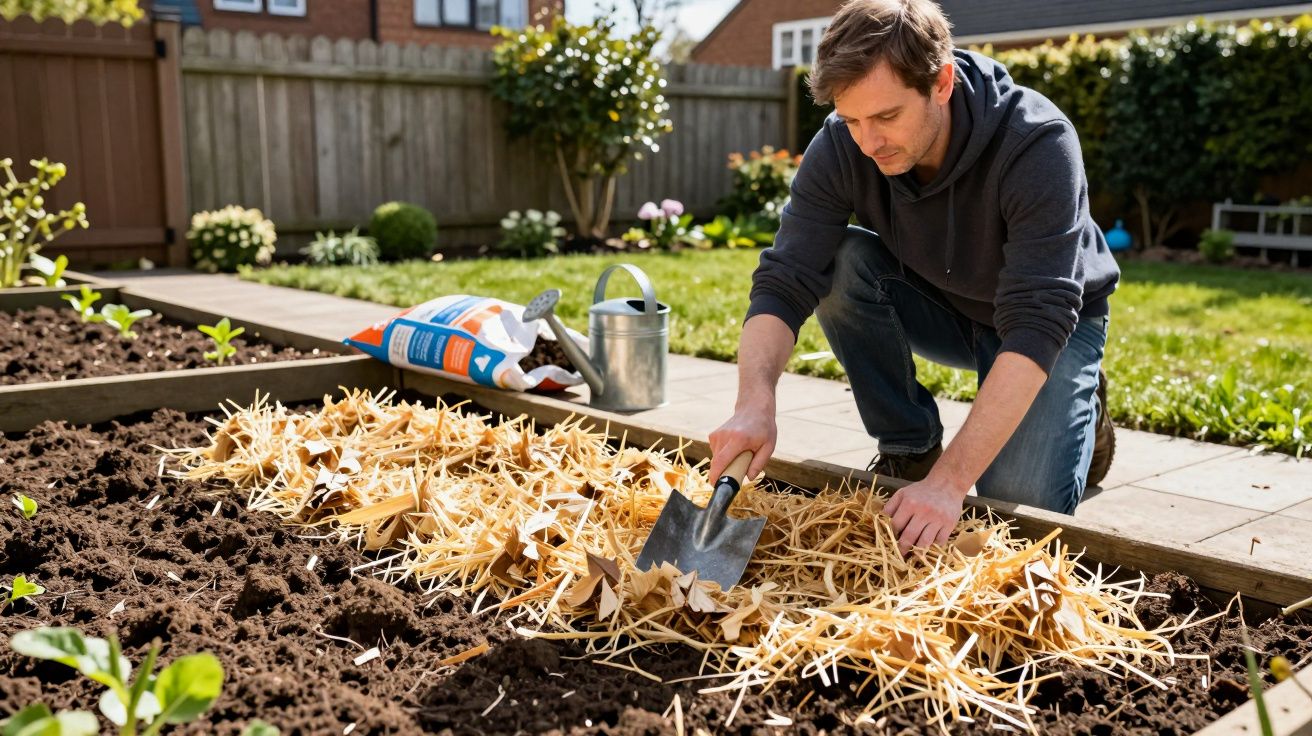
You can spend a Saturday planting native borders, swapping to peat-free compost, and setting up a water butt-then still miss the one step that actually makes soil regeneration stick. Environmentally conscious homeowners often treat the soil like a surface you top up, when it’s really a living system you rebuild. Get this wrong and you’ll keep buying bags, keep watering, and keep wondering why the garden looks “fine” but never truly thrives.
It usually happens quietly. You clear a bed, spread compost, mulch neatly, and feel that satisfying sense of doing things properly. A month later the ground is crusty again, plants sulk in heat, and weeds punch through like they own the place. The missing piece isn’t more inputs. It’s what happens after you add them.
The underestimated step: stop leaving soil bare (even briefly)
Bare soil is the fastest way to undo your good intentions. Sun bakes the surface, rain compacts it, wind strips it, and microbes lose their food source when roots aren’t feeding them. You can add high-quality compost and still watch structure collapse if the soil spends weeks exposed.
The overlooked habit is simple: cover the soil as a default, not as an occasional extra. In practice, that means either a living cover (plants) or a dead cover (mulch) at almost all times, including “in-between” seasons when beds look empty but the soil is still working.
Think of it like this: compost is the delivery; cover is the protection. Without protection, the delivery gets raided.
What “cover” looks like in an ordinary UK garden
You don’t need a smallholding or specialist kit. The point is to keep impacts off the surface and keep biology ticking over.
- Mulch: leaf mould, woodchip (paths and around shrubs), straw (veg beds), or your own chopped prunings.
- Living cover: clover in gaps, winter green manures, low-growing groundcovers under shrubs, or simply letting a “temporary” plant occupy empty space.
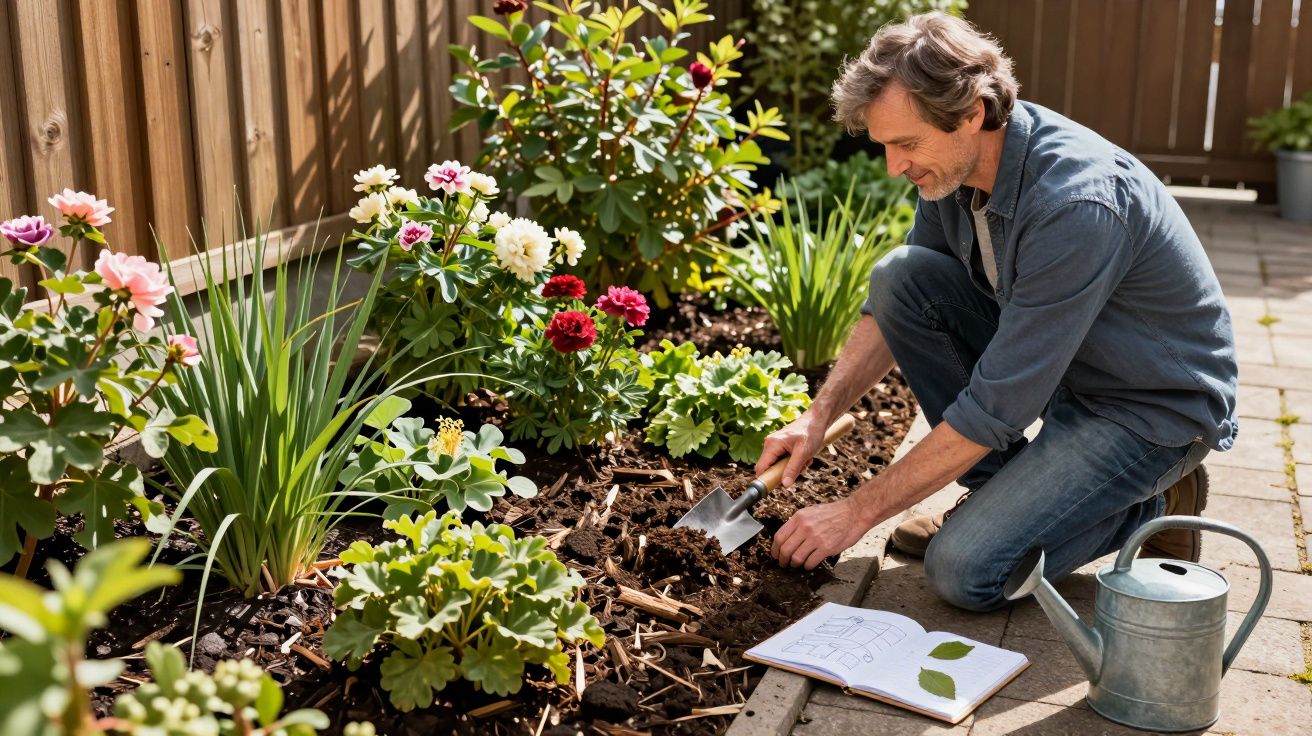
- Compost as a thin layer: 1–3 cm, then covered, rather than a thick blanket left open to weather.
If you can see a lot of exposed brown earth for long stretches, you’re running the soil like a patio.
Why it works (without the buzzwords)
Soil doesn’t regenerate because you sprinkled something on top. It regenerates because countless organisms rebuild structure-crumbs, pores, channels-and that requires stable moisture, stable temperature, and a steady supply of carbon. Bare soil is unstable on all three.
Cover helps in ways you can feel with your hands:
- The surface stays softer because it’s cushioned from heavy rain impact.
- The soil holds water longer because evaporation slows.
- Worms and microbes get food and shelter, so they keep processing organic matter into stable humus.
- Weed pressure often drops because you’re not offering a blank seedbed.
A useful mental model: roots feed soil; mulch protects soil. You want both.
The common eco-friendly mistake: compost in, cover forgotten
Environmentally conscious homeowners often do the “right” purchase-peat-free compost, organic amendments, no-dig books-then accidentally create a cycle of exposure. Beds get cleared “to look tidy”, left bare for a few weeks, and then topped up again when they slump.
You can spot this pattern if any of these feel familiar:
- You finish harvesting and the bed sits empty until spring.
- You weed and leave the soil finely raked, like a seed tray.
- You add compost, then walk away without mulching because it “looks messy”.
- You rely on watering to compensate for soil that dries out quickly.
None of this is a moral failure. It’s just gardening culture: bare beds look cared-for. Soil biology disagrees.
A practical 10-minute reset for most gardens
Don’t redesign the whole plot. Change the default.
- Pick one area you struggle with (veg bed, tired border, new hedge line).
- Add a thin layer of compost if you have it (optional, but helpful).
- Cover immediately with 5–8 cm of mulch, or sow/plant a living cover.
- Leave roots in the ground when you pull annuals: cut at soil level where possible, don’t yank everything out.
- Avoid digging “to loosen” unless you’re fixing a specific problem (e.g., drainage work). Let biology do the loosening under cover.
It won’t look like an instant makeover. It will look calmer, darker, and slightly less “showy”. Then, after a season, you’ll notice the difference when you push a trowel in.
“If the soil is always naked, it’s always recovering.”
When cover crops are worth it (and when mulch is enough)
Cover crops (green manures) can be brilliant, but they’re not mandatory. If you’re busy or short on space, mulch does most of the job. Cover crops shine when you have a bed that would otherwise sit empty for months, especially over winter.
A simple rule:
- Short gap (a few weeks): mulch.
- Long gap (8+ weeks): consider a cover crop, or a quick “placeholder” plant.
If you do use a cover crop, keep it uncomplicated. Choose something you can actually cut down on time, rather than a vigorous tangle that becomes another job you resent.
The quiet payoff: less watering, fewer problems, steadier growth
This step rarely gets credit because it’s not glamorous. There’s no new product, no dramatic before-and-after photo, no satisfying “tidy bed” moment. But it’s the difference between feeding plants for a month and regenerating soil for years.
Here’s what often changes first:
- Water soaks in rather than sheeting off.
- You see more worm activity under the mulch.
- Plants cope better with hot, dry spells.
- Weeding becomes quicker because the soil surface isn’t constantly primed for germination.
You’ll still add compost sometimes. You’ll still intervene. But you’ll stop fighting the same battles on repeat.
| Habit | What it signals | Better swap |
|---|---|---|
| Leaving beds bare after clearing | Soil takes the full hit of weather | Mulch the same day or plant a cover |
| Constant “tidying” and raking | Disturbs structure, creates a seedbed | Chop-and-drop, then cover |
| Watering often to keep things going | Soil can’t hold moisture | Cover to reduce evaporation |
FAQ:
- Does mulching attract slugs in the UK? It can, especially in damp springs. Use thinner mulch around seedlings, water in the morning, and keep a small clear ring around vulnerable young plants until they’re established.
- Is woodchip safe for soil regeneration? Yes, particularly on paths and around shrubs and trees. In veg beds, use compost or leaf mould nearer the surface and keep fresh woodchip mainly as a top layer or on paths.
- Do I need to dig mulch in? No. Leave it on top and let worms and fungi pull it down. Digging often disrupts the very structure you’re trying to rebuild.
- What if I hate how mulch looks? Use finer materials (leaf mould, composted bark, well-rotted compost) and keep edges crisp. The neatness comes from borders and paths, not from bare soil.



Comments (0)
No comments yet. Be the first to comment!
Leave a Comment