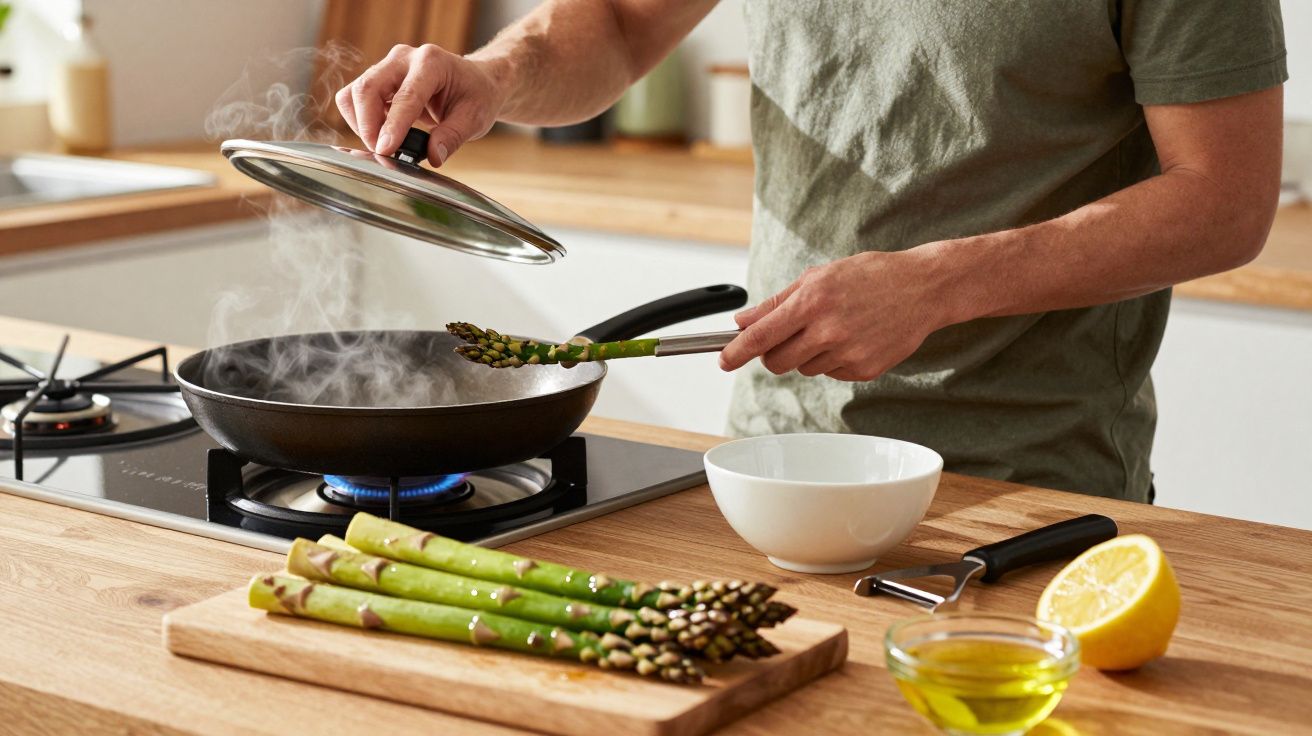
Last week I watched someone ruin asparagus in real time, then blame the veg. It happened in the same breath as a bizarre pop-up line - “of course! please provide the text you would like translated.” - flashing across their phone while they cooked, as if the kitchen itself was asking for clarity. Asparagus matters because it’s one of the quickest, most expensive-to-waste vegetables in the shop: treat it badly and you’ll think you hate it; treat it properly and it becomes a five-minute luxury.
They’d dropped thin spears into a cold pan, added a splash of water, slammed on a lid, and wandered off. When the lid came off, the tips were mush and the stalks were squeaky. The conclusion was immediate: “Asparagus is pointless.”
It isn’t. The method was.
Why asparagus gets a bad reputation
Asparagus has a tiny window between “snappy and sweet” and “wet and sad”. That’s not a personality flaw - it’s physics and plant structure. The tips are delicate and cook fast; the lower stalk is fibrous and needs either trimming, peeling, or a bit more time. If you cook the whole spear as if it’s uniform, you’re setting it up to fail.
Most asparagus disappointment comes from three habits that sound sensible but backfire:
- Cooking it too long “to be safe”
- Trapping steam under a lid and turning it grey
- Skipping prep, then chewing through woody ends like you’re doing penance
The veg ends up bland because the heat was wrong, watery because the moisture had nowhere to go, and tough because the worst bit was left on. Then we blame the ingredient, not the approach.
The one thing asparagus needs: decisive heat
Asparagus likes speed. Not frantic flapping, but confident heat that gives it colour and keeps its bite. When you use high heat - roasting, grilling, or a hot pan - you drive off excess water and concentrate flavour. The spears stay bright, the tips stay intact, and you get that faint nutty edge that makes people go quiet for a second.
Low, slow cooking tends to do the opposite. It softens the cell walls before browning can happen, so you end up with a vegetal mush that tastes more like “green” than “asparagus”. It’s the same reason boiled asparagus so often tastes like someone whispered “spring” into a saucepan and called it dinner.
If your only experience is limp, overcooked spears next to a chicken breast from 2009, of course you think asparagus is the problem.
A simple prep routine that fixes most of it
You don’t need chef tricks. You need two minutes of attention before heat touches it.
Snap or trim the ends. Hold a spear and bend it; it will naturally break where tender turns to woody. If you’re cooking a bunch, line them up and cut the ends off at roughly the same point after snapping one as a guide.
Then make a call based on thickness:
- Thin spears: no peeling; they’re tender already.
- Medium spears: optional peel on the lower third if you want a softer bite.
- Thick spears: peel the lower half; otherwise the outside stays tough while the inside cooks.
That’s it. Most “asparagus is stringy” complaints disappear right here.
Three ways to cook it so it tastes like it cost what it cost
1) Roast it (best for flavour, hardest to mess up)
Heat the oven to 220°C (200°C fan). Toss asparagus with olive oil, salt, and pepper. Spread it out so the spears aren’t stacked like kindling, then roast for 8–12 minutes depending on thickness.
Finish with one of these, not all:
- Lemon zest and a squeeze of juice
- Parmesan shavings
- A soft-boiled egg and black pepper
Roasting gives you browned spots and a dry, savoury finish. It tastes deliberate.
2) Sear it in a hot pan (best for speed)
Get a frying pan properly hot, add a little oil, then asparagus in a single layer. Cook for 3–6 minutes, turning occasionally, until bright green with a few charred freckles.
Add a small knob of butter and a clove of crushed garlic for the final 30 seconds, then take it off the heat. Butter too early burns; garlic too early turns bitter. Timing is the whole game.
3) Blanch it (best for salads and keeping it vivid)
Salted boiling water, asparagus in for 1–3 minutes, then straight into iced water. Dry it well before dressing.
Blanching is not “boiling it to death”. It’s a quick reset that keeps it crisp and makes it behave in cold dishes. A mustardy vinaigrette and some toasted almonds turns it into lunch rather than garnish.
Stop pairing it with nothing
Part of the asparagus problem is context. People serve it as a lonely side, like a health obligation, then wonder why it feels underwhelming. Asparagus shines when it has a partner: fat, acid, and something savoury.
Try these combinations and you’ll see why restaurants keep it on the menu:
- Fat: olive oil, butter, hollandaise, tahini
- Acid: lemon, vinegar, capers, pickled shallots
- Savoury: parmesan, anchovy, bacon, miso, soy
If your asparagus tastes “grassy”, it’s usually missing acid and salt. If it tastes “thin”, it’s missing fat. Fix the plate, not the vegetable.
A quick cheat sheet for the common mistakes
Here’s the pattern I notice: people cook asparagus like they’re apologising for it. Too gentle. Too cautious. Too much water. Then they over-correct with heavy sauce to hide the result.
Swap that for a few rules that are easy to remember when you’re hungry:
- Don’t lid it unless you want steamed veg (and you probably don’t).
- Don’t crowd the pan; steam is the enemy of browning.
- Don’t cook it until it bends like spaghetti; stop when it still resists slightly.
- Do season it properly; asparagus is mild and needs help.
- Do finish with something sharp (lemon, vinegar) to make it taste like itself.
| Problem you taste | Likely cause | Quick fix |
|---|---|---|
| Mushy tips | Too long / trapped steam | Higher heat, shorter time, no lid |
| Stringy, woody bite | Ends not trimmed / thick skin | Snap ends; peel lower half |
| Bland, “green water” | Too much boiling / no seasoning | Roast or sear; salt + acid |
The quiet difference between “I ate it” and “I want it again”
Asparagus is unforgiving in the way good ingredients often are. It doesn’t tolerate distraction, and it won’t cover for sloppy heat. But when you cook it with intent - hot pan, quick roast, proper prep - it tastes clean and rich at the same time, like spring without the cliché.
Next time asparagus disappoints you, don’t write it off. Change the way you use it, and you’ll stop treating it as a duty vegetable and start treating it as the fast, elegant thing it is.
FAQ:
- Is thick asparagus worse than thin? No. Thick spears can be sweeter and juicier, but they usually need peeling on the lower half and a minute or two longer cooking.
- Should I always snap the ends? It’s the easiest method and works well. If you’re cooking for a crowd, snap one spear to find the break point, then trim the rest with a knife for speed.
- Why does my asparagus go dull green? Usually too much cooking or steaming under a lid. Use higher heat and stop while it’s still bright and slightly firm.
- Can I cook asparagus ahead of time? Yes-blanch and chill it, then dress it later. For roast or pan-seared asparagus, it’s best eaten straight away for texture.
Comments (0)
No comments yet. Be the first to comment!
Leave a Comment